


Introduction
A phone call comes late at night. A parent, spouse, or business partner is gone. Once the shock sets in, the next question hits hard: what happens to everything they owned, owed, and promised? That is where probate administration steps in.
Probate administration is the court-supervised process that gathers a person’s assets, pays valid debts and taxes, and passes what is left to the right people. Many families are surprised to learn that having a will does not mean the estate skips probate. In many cases, the will is simply the roadmap the probate court uses during the process.
This guide explains, in plain language:
how probate administration works from start to finish
which assets pass through the probate estate and which transfer outside court
what the personal representative must do at each stage
when it is wise to call a probate attorney for help
You will see how smart planning can reduce stress, delays, and cost. Throughout the guide, you will also see how Murray & Regan Law Firm supports families, business owners, and nonprofits with firm, experienced guidance when everything feels uncertain. This discussion offers general information and is not legal advice for any specific case.
H2 Section 1: What Is Probate Administration and Why Does It Matter?

Probate administration is the legal process a court uses to settle a person’s estate after death. The probate court confirms that a will is valid, appoints a personal representative, makes sure debts and taxes are paid, and then oversees the transfer of assets to heirs and beneficiaries. This court review protects everyone involved and gives the process structure and transparency.
During probate administration, the judge does not handle every small detail. Instead, the court sets the rules and gives authority to the personal representative to act on behalf of the estate. The court then reviews major steps, especially accountings and the final distribution plan, to make sure the law is followed.
It helps to know a few basic terms before going deeper:
| Term | Meaning |
|---|---|
| Decedent | The person who has died. |
| Estate | All property, accounts, and debts owned at death. |
| Testate | The decedent died with a valid will. |
| Intestate | The decedent died without a valid will. |
| Intestate succession | State laws that decide who inherits when there is no will. |
| Personal representative | The court-approved estate manager (executor or administrator). |
| Beneficiary | Person or entity named in a will or trust to receive assets. |
| Heir | Person who inherits under state law when there is no will. |
“In this world nothing can be said to be certain, except death and taxes.” — Benjamin Franklin
Many people think probate only happens when there is no will. That is not correct. An estate may go through probate administration even with a clear, signed will, especially when the person owned real estate or significant accounts in their own name — a pattern well documented in the 2025 Wills and Estate Planning Study. Simple estates may finish in a few months. Larger or disputed estates can take longer, though most wrap up in about a year.
H2 Section 2: Probate vs. Non-Probate Assets — What Goes Through Court?
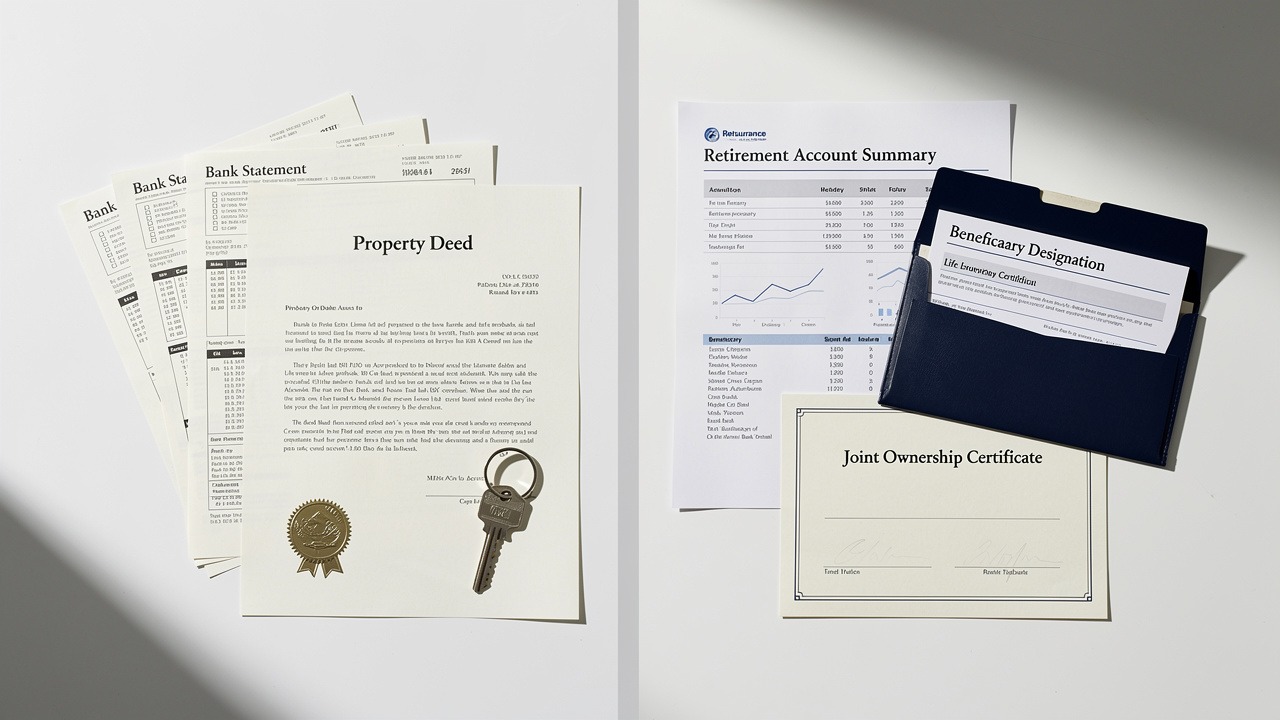
One key part of probate administration is figuring out which assets the court needs to supervise. Not everything a person owns becomes part of the probate estate. How an asset is titled, and whether someone is named as a beneficiary, controls whether it must pass through probate or can transfer directly.
Here is a simple comparison:
| Probate Assets | Non-Probate Assets |
|---|---|
| Property titled only in the decedent’s name | Accounts with named beneficiaries (IRAs, 401(k)s, life insurance) |
| Bank accounts without beneficiary designations | Payable-on-Death (POD) or “In Trust For” bank accounts |
| Solely owned real estate | Property held in a living trust |
| Personal property without survivorship rights | Joint tenancy with right of survivorship |
Retirement accounts and life insurance are classic non-probate assets. During probate administration, the personal representative usually does not control these funds. The company pays them straight to the person listed on the form, even if that person is not named in the will.
POD and transfer-on-death (TOD) accounts work in a similar way. Once the bank or brokerage receives a death certificate and basic paperwork, it moves the funds to the named person without a court order. Assets placed in a properly funded living trust also avoid the probate court, because the successor trustee follows the written trust instructions instead.
Joint tenancy with right of survivorship is another common way to bypass probate administration. When one owner dies, the survivor becomes the full owner by law. Smart planning with beneficiary designations, trusts, and title choices can shrink the probate estate and reduce delay and expense.
One common mistake is leaving old beneficiary forms in place after a divorce, remarriage, or the birth of a child. Reviewing those designations every few years, and after major life changes, keeps non-probate transfers aligned with the person’s wishes.
Murray & Regan Law Firm often blends probate administration with forward-looking estate planning so families and business owners can keep more control and reduce court involvement where the law allows.
H2 Section 3: The Step-by-Step Probate Administration Process

Although each state has its own rules, the steps in probate administration look similar across most courts. Knowing this basic roadmap can lower anxiety when a case starts. It also helps a personal representative understand what the judge expects and in what order.
Opening The Estate
An interested person, often the named executor or a close relative, files a petition with the probate court. This filing asks the court to start probate administration and usually includes the death certificate and the original will. The court schedules a hearing or reviews the papers and then decides whether to open the case.Appointment Of The Personal Representative
Once the court accepts the case, it appoints a personal representative. If there is a will, that person is usually the named executor; otherwise, the court selects an administrator based on state law priority. The court issues formal documents, often called Letters Testamentary or Letters of Administration, giving this person legal authority to act. In some estates, the court also requires a bond to protect heirs and creditors against misuse of estate funds.Notice To Creditors And Beneficiaries
The personal representative must notify all known heirs and beneficiaries that probate administration is underway. Most states also require a public notice in a local newspaper so unknown creditors have a fair chance to file claims. A fixed claim period starts at this point, and creditors must act within that time.Inventory And Appraisal Of Assets
Next, the personal representative gathers and secures all estate property, from real estate to bank accounts, investments, and personal items. They prepare a written inventory that lists each asset and its value as of the date of death — a task that can be streamlined using approaches outlined in research on Probate Lead Filtering: Automated versus manual methods. For real estate or valuable property, they often hire appraisers to give formal valuations. This step may also include tracking down online banking or investment accounts that family members did not know existed.Payment Of Debts, Taxes, And Expenses
The personal representative reviews creditor claims and pays valid debts from estate funds. They also pay funeral costs, court fees, and professional fees related to probate administration. At the same time, they file the decedent’s final income tax returns and any required estate tax returns.Resolution Of Disputes
Sometimes heirs disagree about what the will means or whether it is valid. Creditors may also argue over claims. These disputes get handled through hearings, negotiations, or mediation, with the probate judge making final legal rulings when needed.Final Accounting And Petition For Distribution
When debts, taxes, and disputes are resolved, the personal representative prepares a detailed accounting. This report shows money received, bills paid, and the plan for dividing what remains. The representative files it with the court and asks for approval of the proposed distribution.Asset Distribution And Estate Closing
After the court signs off, the personal representative distributes assets to heirs and beneficiaries according to the will or state law. They collect receipts and any other proof of transfer. The court then issues orders that close probate administration, and the personal representative’s duties end.
In many states, straightforward probate administration takes about six to twelve months. Large estates, business interests, or lawsuits can stretch the timeline. The personal representative can receive reasonable pay for this work, which comes from estate assets, not personal funds.
Common factors that slow the process include:
disputes over the will or over who should serve as personal representative
hard-to-value assets such as closely held businesses or rare collectibles
tax audits or complex financial records that take time to review
H2 Section 4: Types of Probate Proceedings and When Each Applies
Probate administration does not always mean long hearings and heavy court control. Lawmakers created several types of proceedings so that simple estates can move faster while complex cases still receive close supervision. Choosing the right path depends on asset value, disputes, and state rules.
Here is an overview of common options:
| Type of Proceeding | When It Applies | Key Features |
|---|---|---|
| Small estate procedures | Estate value is under a state-set limit | Heirs may use affidavits or short forms, with little or no court time, leading to faster and lower-cost transfers. |
| Informal probate | No disputes and clear paperwork, often in Uniform Probate Code states | The personal representative handles most tasks through filings, with limited hearings and flexible timelines. |
| Formal probate (supervised or unsupervised) | Legal questions or family disputes exist, or the judge wants closer review | The court reviews more steps, may require approvals before key actions, and gives extra protection where conflict exists. |
| Ancillary probate | The decedent owned real estate or certain assets in another state | A second proceeding runs in that other state, focused only on the local property so title can pass cleanly. |
Because each state sets its own limits and rules, picking the right form of probate administration can be tricky. The wrong choice can slow everything down or raise costs. This is one area where guidance from an experienced probate attorney pays off quickly, especially when the estate includes real estate in more than one state or a closely held business.
H2 Section 5: Why Working With an Experienced Probate Attorney Matters

Some families start probate administration on their own, especially when the estate seems simple. But even a case that looks easy from the outside carries strict deadlines, detailed forms, and rules that vary from court to court. A mistake can delay closing the estate or even create personal risk for the personal representative.
“Discourage litigation. Persuade your neighbors to compromise whenever you can.” — Abraham Lincoln
An experienced probate attorney can help in several important ways:
Guiding The Process
An experienced probate attorney guides the personal representative through every court requirement. They know which forms belong where, how to meet deadlines, and how local judges prefer to see information. This steady guidance keeps probate administration moving instead of stalling over technical issues.Avoiding Costly Errors
A lawyer also helps prevent expensive errors. Misreading a will, missing a creditor claim, or distributing assets too early can lead to lawsuits or surcharge against the personal representative. With legal advice, the representative can make informed choices and reduce the chance of difficult corrections later.Reducing Family Conflict
Family conflict is common when money, businesses, or sentimental items are at stake. A probate attorney serves as a neutral voice who can explain the law and calm tense meetings. That support often protects relationships while still honoring the written terms of the will and the rules of probate administration.Handling Taxes And Creditor Claims
Taxes and creditor claims bring another layer of difficulty. An attorney understands how to review claims, reject improper ones, and work with accountants to handle income and estate tax filings. This careful review protects the estate’s value and keeps the personal representative within the bounds of the law.
Murray & Regan Law Firm offers full-scope support through every stage of probate administration, from opening the estate to final distribution. The firm combines firm advocacy with steady, professional guidance, whether an estate is simple or hotly contested. Attorney fees are treated as administrative expenses, so they are paid from the estate, not directly from family pockets. If a new or pending estate feels overwhelming, Murray & Regan Law Firm is ready to step in and shoulder the legal load.
Conclusion

Probate administration brings structure to one of life’s hardest moments. It is a step-by-step, court-supervised process that gathers assets, pays the right bills, and then passes what remains to heirs and beneficiaries. When handled correctly, it protects the decedent’s wishes and the people left behind.
By understanding how probate administration treats different types of assets, what the personal representative must do, and which kind of proceeding fits the estate, families and business owners can move through this period with more confidence. Professional legal help turns a maze of rules into a clear, workable plan. Murray & Regan Law Firm stands ready with experienced, passionate representation for those who want to protect an estate, avoid mistakes, and honor a loved one’s legacy with care.
FAQs
How Long Does Probate Administration Typically Take?
Most estates move through probate administration in about six to twelve months. A small, undisputed estate with simple assets may close faster. Larger estates, business interests, or family disputes can extend the case for several years. Prompt action and skilled legal help usually keep the timeline as short as possible.
Do All Estates Have To Go Through Probate?
No. Only assets that form part of the probate estate must pass through probate administration. Property held in trust, accounts with clear beneficiary designations, and jointly owned assets with survivorship rights usually transfer outside the court process. Assets titled only in the decedent’s name generally require probate.
What Happens If Someone Dies Without a Will?
When a person dies without a will, the law calls this dying intestate. The court still opens probate administration, but state intestate succession rules decide who inherits. The judge appoints an administrator instead of an executor, and assets pass in a set order, usually to a spouse, children, then other relatives.
Who Pays For Probate Administration Costs?
Probate administration costs come from the estate itself, not from relatives’ personal bank accounts. Court filing fees, attorney fees, appraiser fees, and similar expenses are treated as administrative costs. The personal representative’s reasonable compensation is also paid from estate funds before remaining assets go to heirs and beneficiaries.